Running Reweight By Utilization In Octopus
Need to run a reweight by utilization but can't with octopus? Try this... ceph osd reweight-by-utilization 0.5 -- 150 Errors: Invalid command: unused arguments xxxxx not in --no-increasing
A few of my Ceph nodes with 60-ish disks each were experiencing frequent reboots. Turns out kernel.nmi_watchdog was rebooting it due to disks holding it up under very high load. By turning it off via `echo "kernel.nmi_watchdog=0" > /etc/sysctl.d/99-watchdog.conf` the problem …
Hosts in my cluster all have two 10GbE links to a switch bonded with LACP. That gives them an effective link of 20GbE normally. But really, even 5Gbps would be enough for most hosts. The kernel in most boxes combined with drivers and such isn't going to be able to push 20GbE, …
Drive Counts 43 2TB 1 2.5TB 23 3TB 42 8TB (In Ceph) 30 8TB (Not In Ceph) Why Why these drives? They're the main data drives I've had and used for years. The only ones I'm going to remove soon are a subset of the 2TB drives with high spin times. Some of them have more than 8.5 …
Once GREAT option for improving OSD performance with spinning disk, esp slow disk, is to use a redundant array of SSDs for the Bluestore Journal. If you've got SSD space to spare you could even put the RocksDB on SSD too. But that needs a LOT more space. The Journal only needs a …
A couple of months back I changed the value of "osd_memory_target" for all of my OSDs from 4GiB to 1.5GiB. That change has stopped all RAM related issues on my cluster. While I suspect but can't prove a small performance drop, it's well worth it in my case.
One issue I've recently run into with a failed SATA drive in one of my NDS-4600 units is that Linux frequently tries to recover the drive by resetting the bus. This takes out a few other disks in the group with it. The resulting IO timeouts cause problems for my Ceph OSDs using …
Ceph has two forms of scrubbing that it runs periodically: Scrub and Deep Scrub A Scrub is basically as fsck for replicated objects. It ensures that each object's replicas are all the latest version and exist. A Deep Scrub is a full checksum validation of all data.
My Ceph cluster at home isn't designed for performance. It's not designed to maximum availability. It's designed for a low cost per TiB while still maintaining usability and decent disk-level redundancy. Here is some recent tuning to help with performance and corruption …
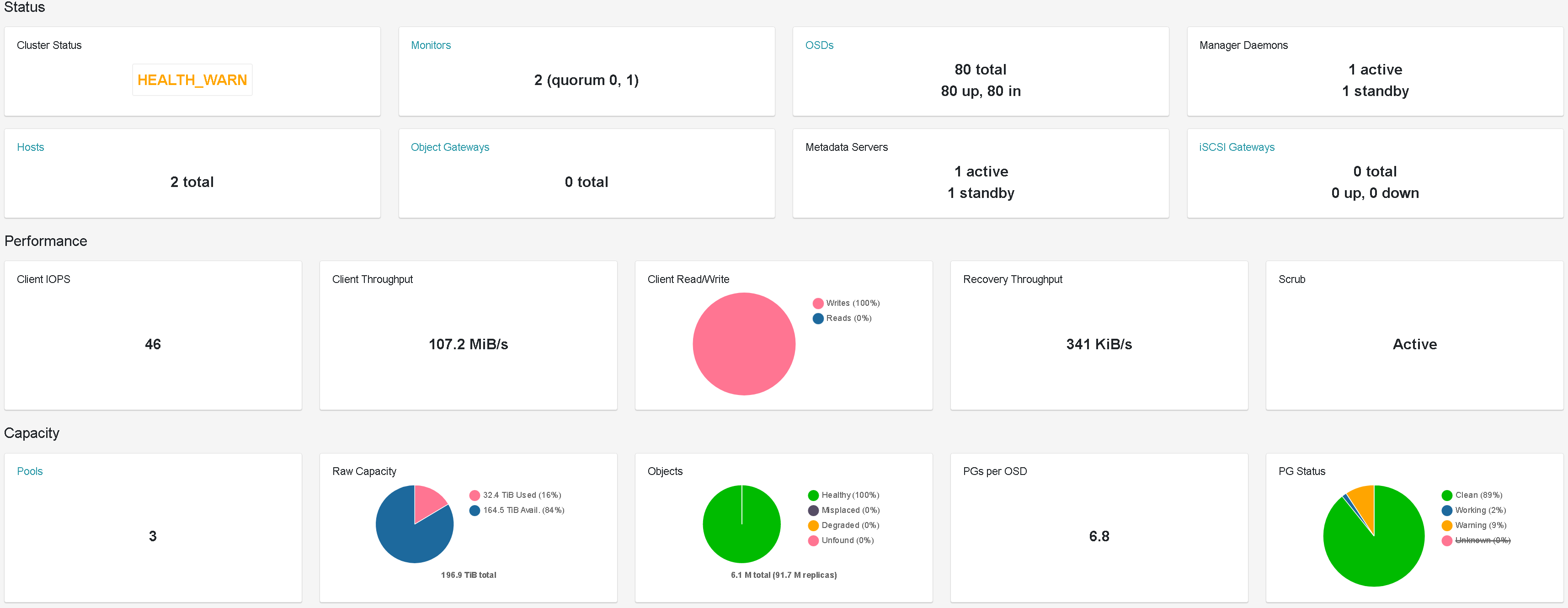
Original post on Reddit Hardware Previously I posted about the used 60-bay DAS units I recently acquired and racked. Since then I've figured out the basics of using them and have them up and working. Ceph The current setup has one unit with 60 2TB-3TB drives attached to a single …
While setting up my Ceph cluster on a set of Dell R710s, one with 60 disks attached to it, I found that I needed to raise fs.aio-max-nr to around 1,000,000. SELinux also needed to be disabled. Once that was done the normal cephadm osd install worked great, even with 60 disks. $ …
[ceph: root@xxxxxx0 /]# ceph orch host add xxxxxxxxxxx1 Error EINVAL: Traceback (most recent call last): File "/usr/share/ceph/mgr/mgr_module.py", line 1153, in _handle_command return self.handle_command(inbuf, cmd) File "/usr/share/ceph/mgr/orchestrator/_interface.py", line …
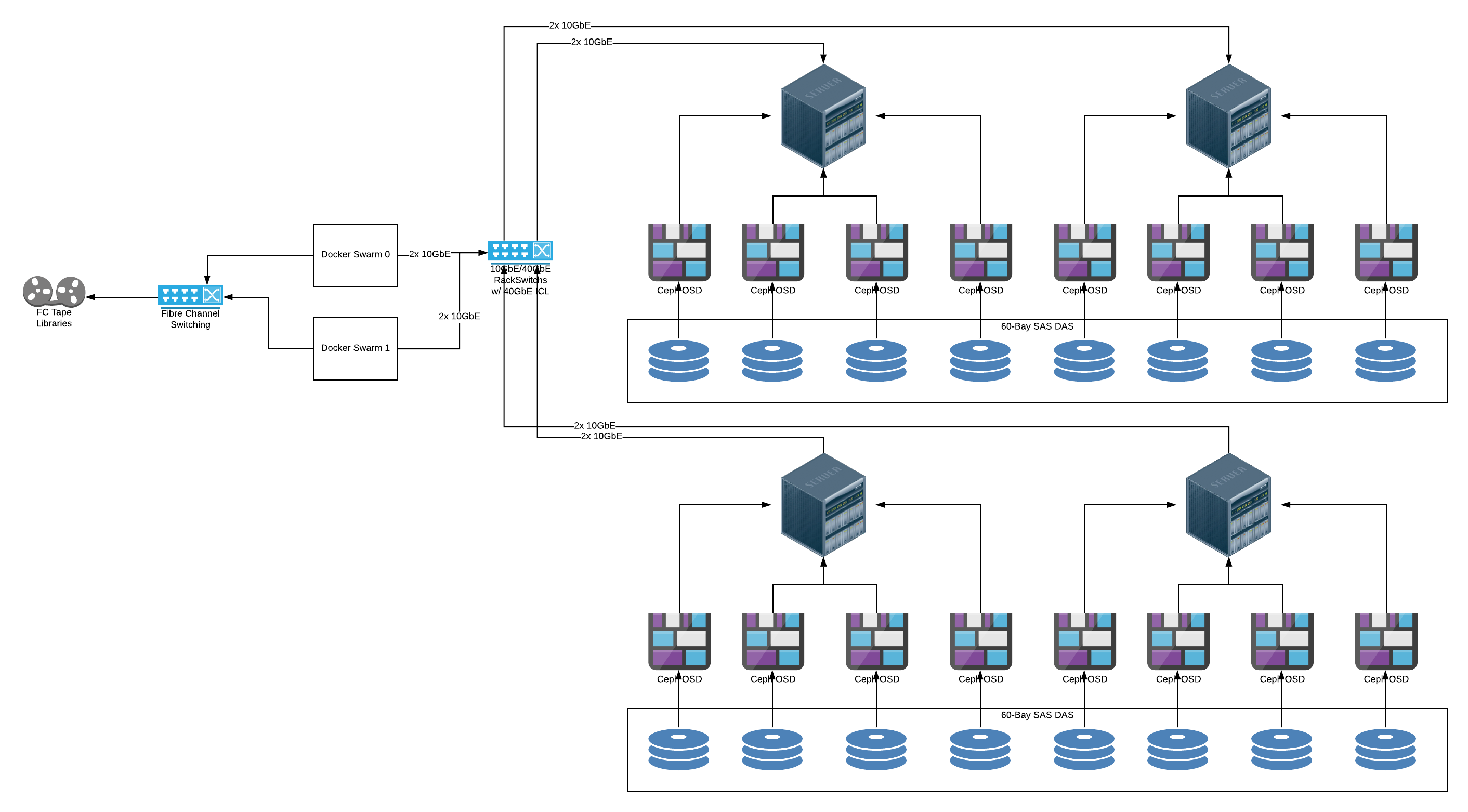
If I were to go Ceph
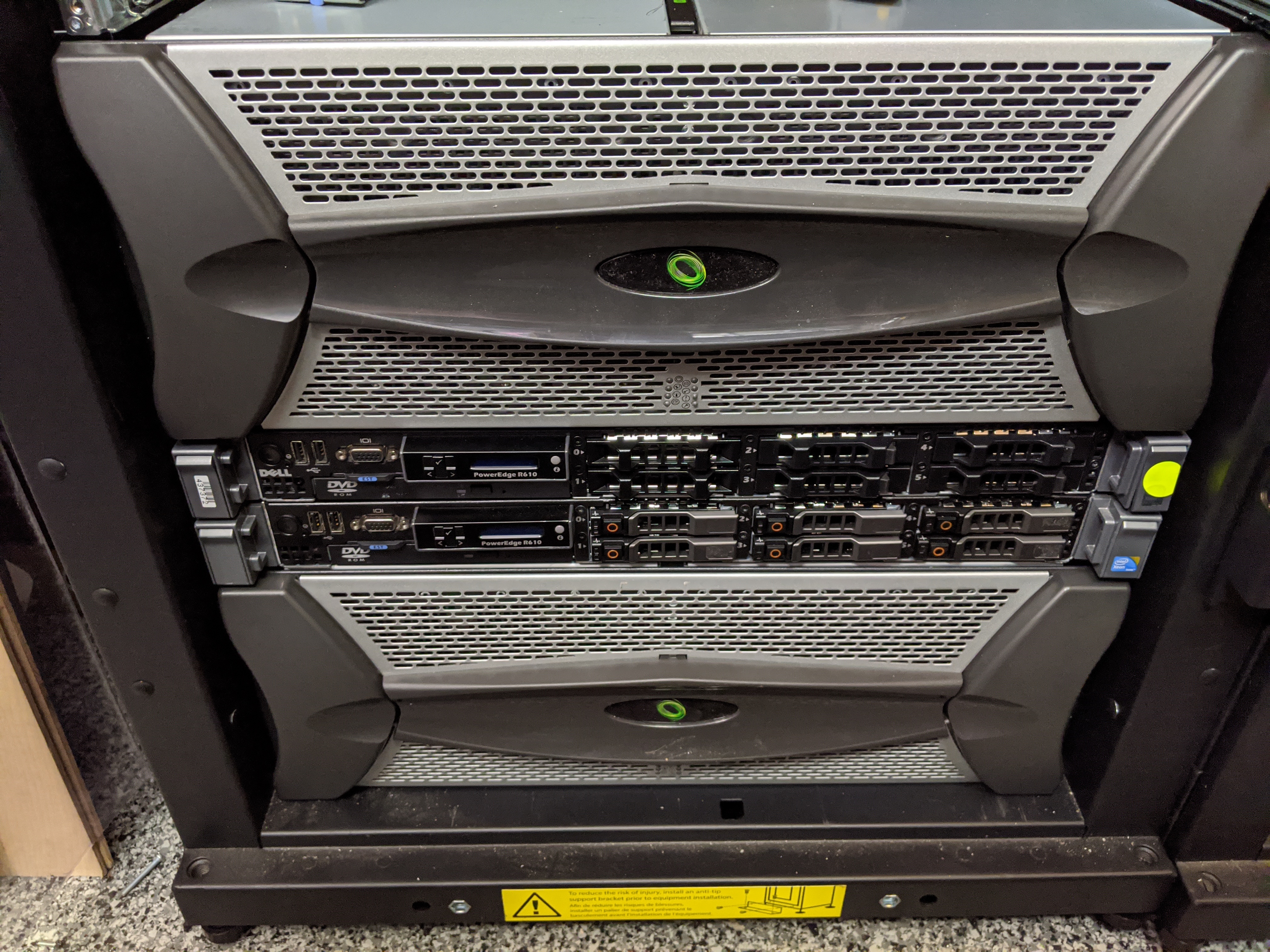
These two NDS-4600-JD-05 units each have space for 60 3.5" drives with four 6 Gbps SAS ports on each of the two controllers. The plan is to connect two R610s (eventually R620s) to each of them with the DAS units partitioned so that each of the R610s/R620s has 30 disks (well, …
Check `pvdisplay` as Ceph can use LVM. zfs destroy data/osd cannot destroy 'data/osd': dataset is busy